

What to Expect on Your First Driving Lesson (Step-by-Step Guide)

The night before your first driving lesson usually comes with a mix of excitement and a few "butterflies" in the stomach. It is a major milestone—the first step toward the freedom of the open road. If you are feeling a bit nervous, remember that every confident driver you see on the road started exactly where you are today.
At Actron Driving School, we believe that the best way to calm those nerves is to know exactly what is coming. Your first lesson isn’t about navigating complex intersections or high-speed merges; it’s about getting comfortable, safe, and acquainted with the vehicle.
Here is a step-by-step breakdown of what your first experience behind the wheel will actually look like.
Preparation: Before You Get in the Car
Before the engine even starts, there are a few administrative and practical steps to check off. Your instructor will meet you at the agreed pickup location—whether that’s your home, school, or workplace.
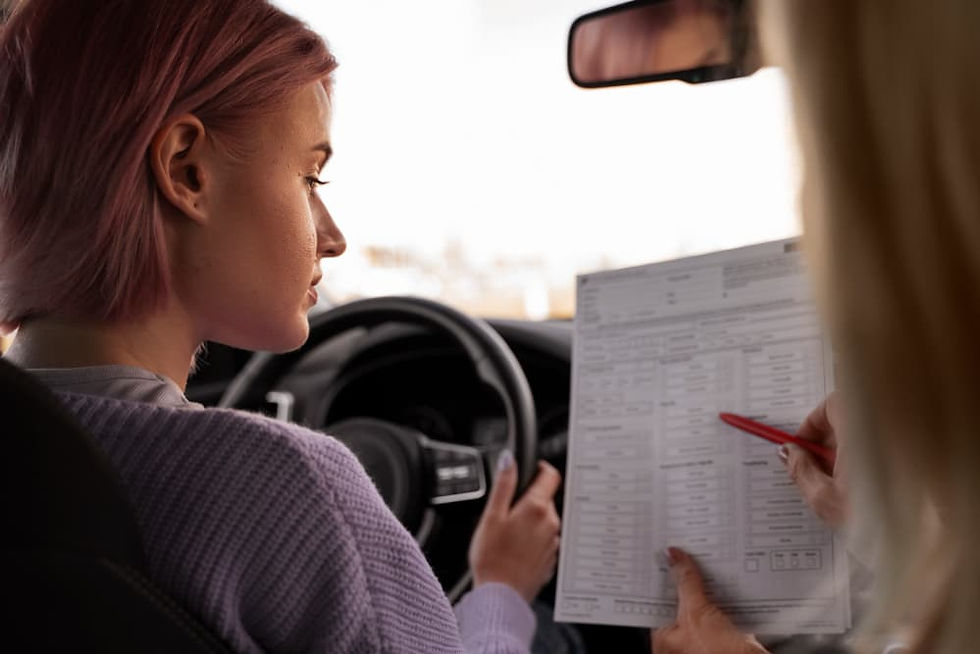
License Check: Your instructor will need to see your learner’s permit or valid license. This is a legal requirement before you can take control of the vehicle.
The Sight Test: You will likely be asked to read a license plate from a distance (usually about 20 metres) to ensure your vision meets the legal standards for driving.
Footwear Matters: This is not the day for heavy boots or flip-flops. Wear flat, thin-soled shoes that allow you to feel the pressure of the pedals accurately.
Getting Comfortable: The Cockpit Drill
Once you’re in the driver’s seat, you won't just "drive off." You’ll start with what instructors call the "Cockpit Drill." This is a sequence designed to ensure you are seated safely and can reach all the controls. A common acronym used is DSSSM:
D – Doors: Checking that all doors (including the passenger side) are securely closed.
S – Seat: Adjusting your seat so your legs have a slight bend when the pedals are fully depressed and you can reach the steering wheel comfortably.
S – Steering: Ensuring you can rest your wrists on top of the wheel with your back against the seat.
S – Seatbelt: Fastening your belt and ensuring it isn't twisted.
M – Mirrors: Adjusting your rearview and side mirrors to minimize blind spots.
Understanding the Controls
Before moving, your instructor will walk you through the primary controls. If you are learning in an automatic car, this is relatively straightforward; in a manual, you’ll spend a bit more time discussing the clutch and gear stick.
The Pedals
You will learn the "right-to-left" rule: the Accelerator (gas), the Brake, and—if applicable—the Clutch. Your instructor will explain how to apply smooth, progressive pressure rather than "stomping" on the pedals.
The Dashboard and Symbols
You’ll get a quick tour of the instrument cluster. You don’t need to be a mechanic, but you should know how to read the speedometer and recognize basic warning lights, like the handbrake indicator or oil light.
Moving and Stopping for the First Time
Now comes the part you’ve been waiting for. Most instructors will take you to a quiet, level side street with very little traffic for your first "move off."
The Safety Check: You’ll learn the importance of the "six-point check"—looking over your shoulders and in all mirrors before moving.
Finding the "Biting Point": If you’re in a manual car, you’ll practice finding that sweet spot where the engine and wheels engage.
Smooth Braking: You’ll practice bringing the car to a gentle, controlled stop. The goal is to avoid that "jerky" feeling where the car jolts forward at the last second.
Developing Steering Technique
Steering feels different than it looks in the movies. Your instructor will likely teach you the "push-pull" method. This technique keeps your hands from crossing over excessively and ensures you have maximum control of the wheel at all times, especially during turns. You’ll practice following the curve of the road and maintaining a consistent position within your lane.
Common Questions About the First Lesson
Will I have to drive in heavy traffic? Almost certainly not. Instructors choose "nursery routes"—quiet residential areas—where you can focus on the car without the pressure of other drivers.
What if I stall the car? Stalling is a rite of passage! Every driver has done it. Your instructor has a dual-control brake on their side, so even if you make a mistake, they can keep the car safe.
How long does the first lesson last? Most initial lessons are between 60 and 90 minutes. This gives you enough time to get through the theory and still get a solid 30–40 minutes of actual driving time.
Your Journey Starts Here
By the end of your first hour, the "mysteries" of the dashboard will be gone, and you’ll have a basic feel for how the car responds to your touch. It’s normal to feel tired—driving requires a high level of mental concentration when you’re first starting out—but you should also feel a great sense of accomplishment.
At Actron Driving School, our goal is to turn those first-day nerves into lifelong confidence. Our patient, professional instructors specialize in guiding beginners through these first steps at a pace that feels right for them.
Ready to get behind the wheel? Book your first lesson with Actron Driving School today and let's get you on the road to success.


Comments